
Camping Under a Starry Sky
in the crater of the Barú Volcano
— With two Canadian travelers —
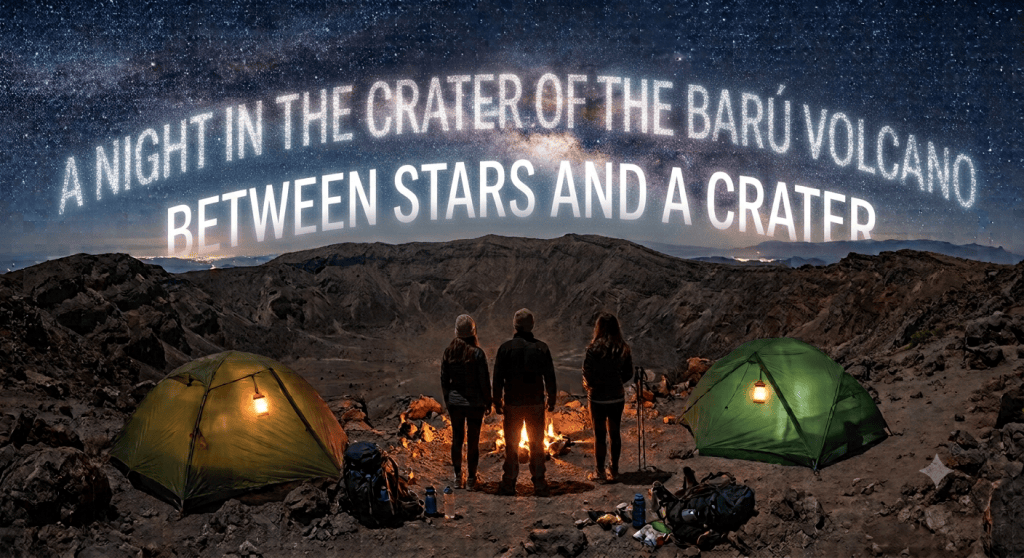
There are expeditions that end when you take off your boots and make it back home. And then there are other hiking journeys in Panama that, for some reason, stay etched in your soul. This is one of those stories.
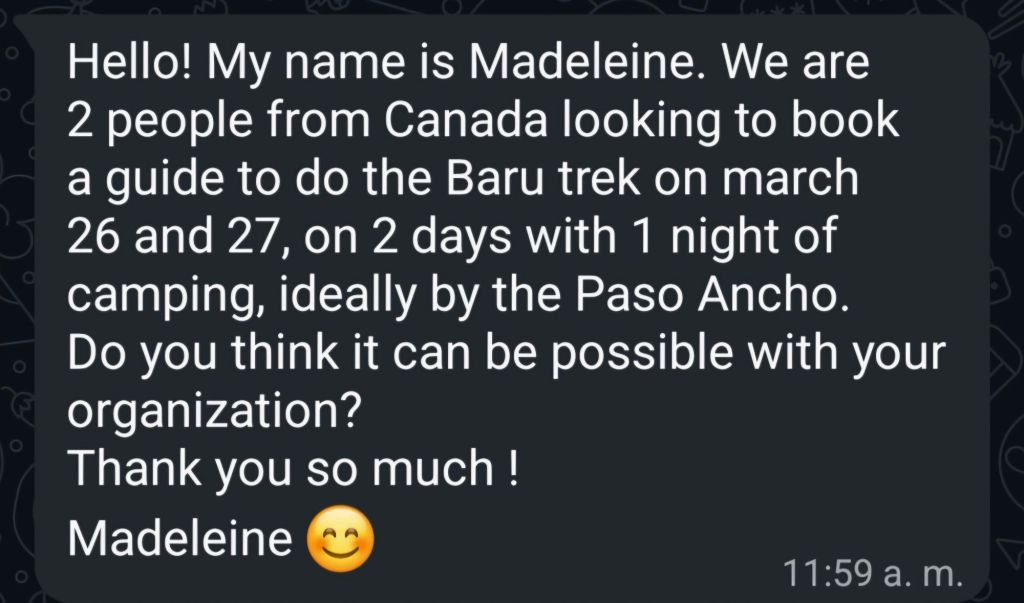
On January 26, 2026, I received a direct message through the BarúExpedition page. It was Madeleine, a woman from Canada who was planning a great adventure in Chiriquí together with her sister, Jeanne.
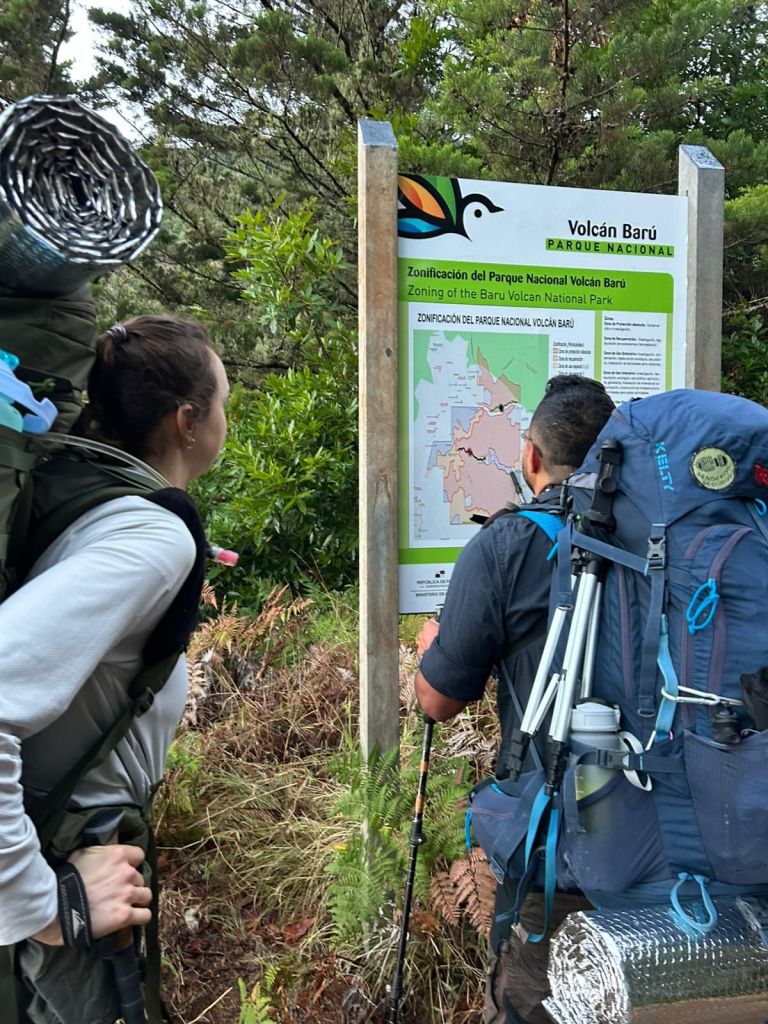
The two sisters shared much more than DNA and a passion for traveling the world: they spoke Spanish, French, and English with remarkable fluency, and they had an enormous curiosity about experiencing Panama’s nature beyond the filters of a screen.
They had a really cool way of organizing their travels: one would plan the mountain routes while the other would take care of the diving tours, since they both enjoy hiking and scuba diving. Both work in science-related fields. Interestingly, although diving is Madeleine’s greatest passion, this time she was the one responsible for organizing the logistics of the trek to the highest point in Panama.
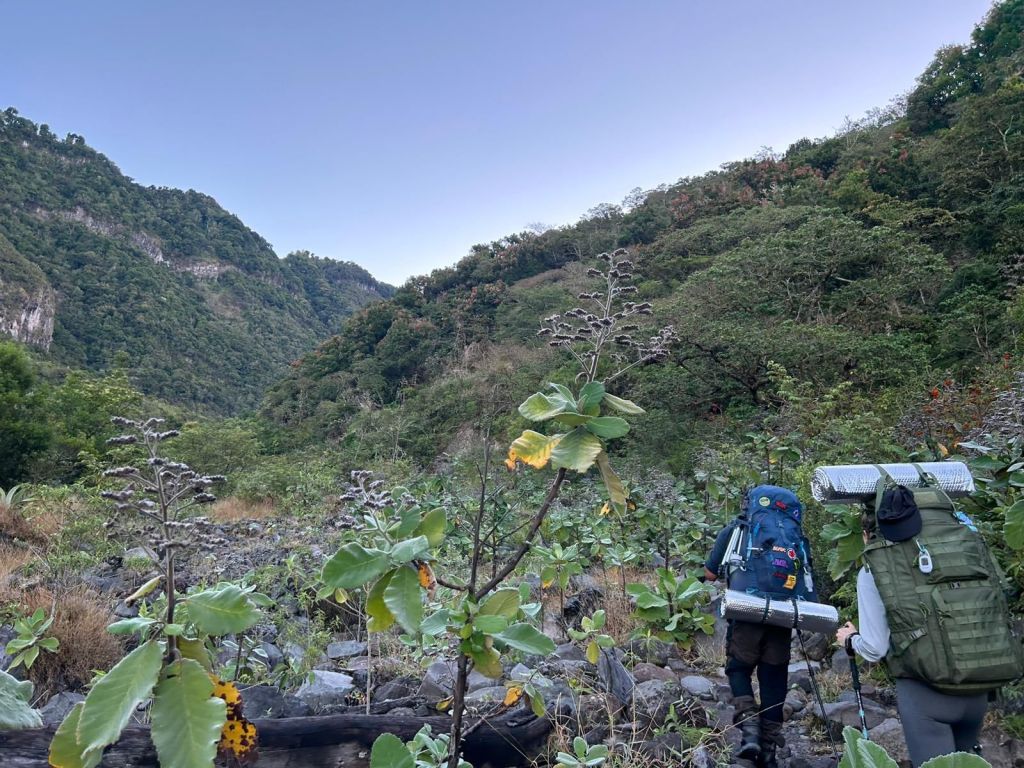
They had seen my page and didn’t want to settle for simply having a digital desire to climb Volcán Barú. They wanted to experience the entire journey: hike the trail, reach the crater area, set up camp, watch the sunset at more than 3,000 meters above sea level, spend the night below freezing, wake up early for sunrise, and hike all the way back down.
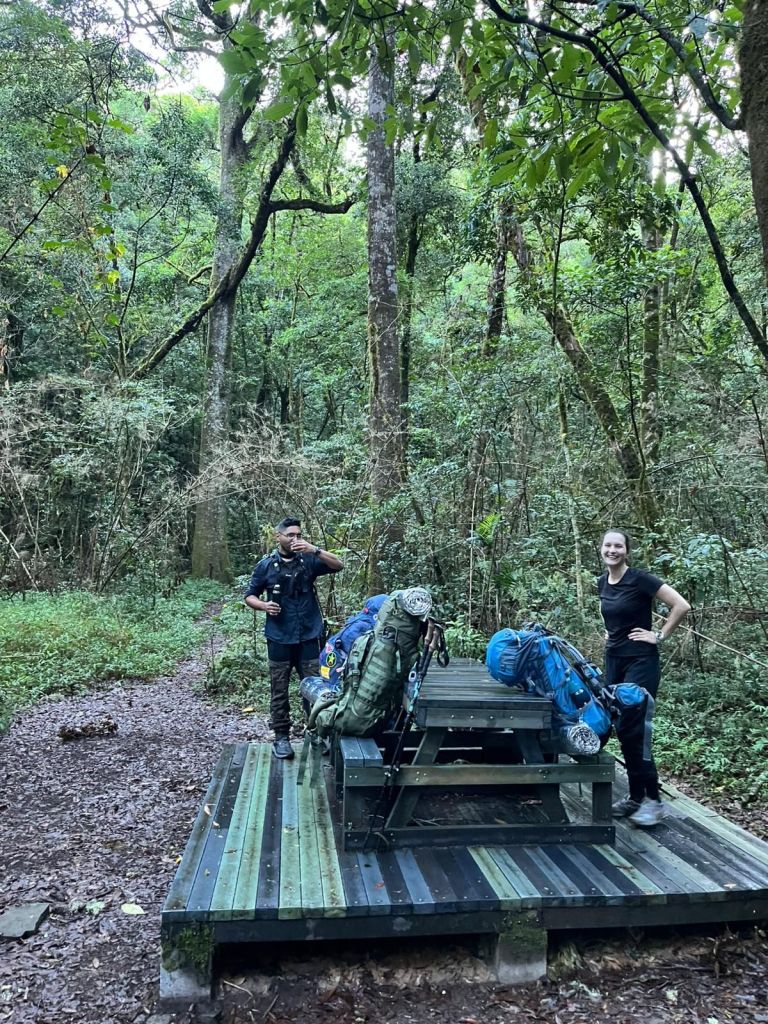
During the two weeks leading up to the expedition, I prepared the technical equipment for BaruExpedition: three-season tents, sleeping bags for low temperatures, sleeping pads, and all the camping logistics. They would bring their personal belongings and a couple of their own pieces of equipment.
The Meeting Point and the Hike
The day finally arrived. We met in the town of Volcán when they came to pick up the equipment. The chemistry was instant; they were the kind of kind and energetic people you genuinely enjoy hiking with. We checked the inventory, organized the backpacks, and headed straight to the trailhead in the Los Llanos de Paso Ancho sector, the most technical and demanding route to ascend the volcano.
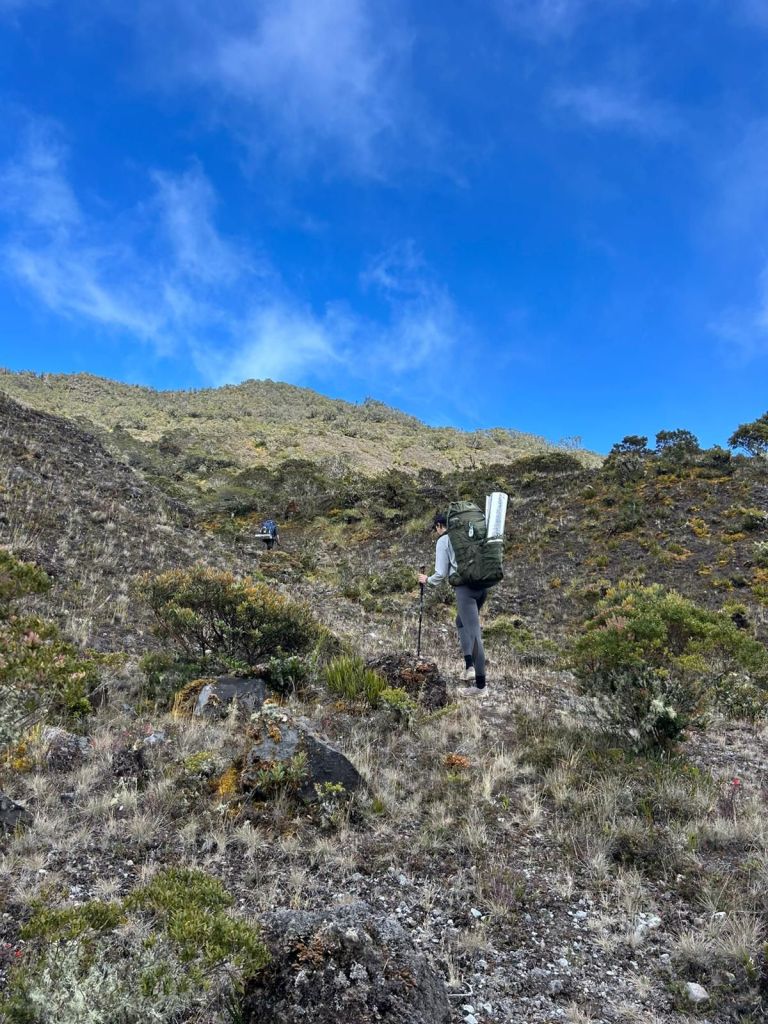
We started hiking early, around five in the morning. With the morning cold hitting our faces, the ascent began. Both were in excellent physical condition, so the hike quickly stopped being merely a test of endurance and became a continuous conversation that lasted practically the entire day.
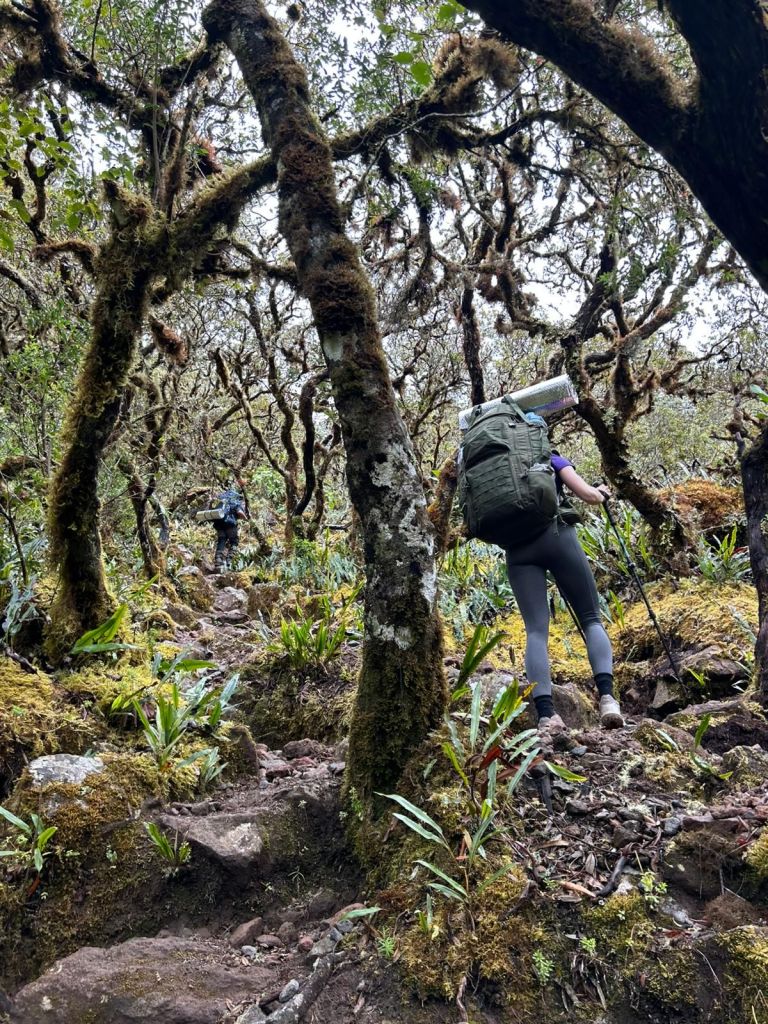
Although they spoke three languages, our communication flowed in a relaxed English, with occasional bursts of French, during which they ended up giving me a couple of quick lessons along the way. That’s when I learned something fascinating: although they are Canadian and French-speaking by heritage, they had lived in Venezuela for years, and Spanish had been one of their first languages. Their Latin American vibe was obvious; the conversation was warm, natural, and had that kind of closeness that makes you feel comfortable from the very first minute.
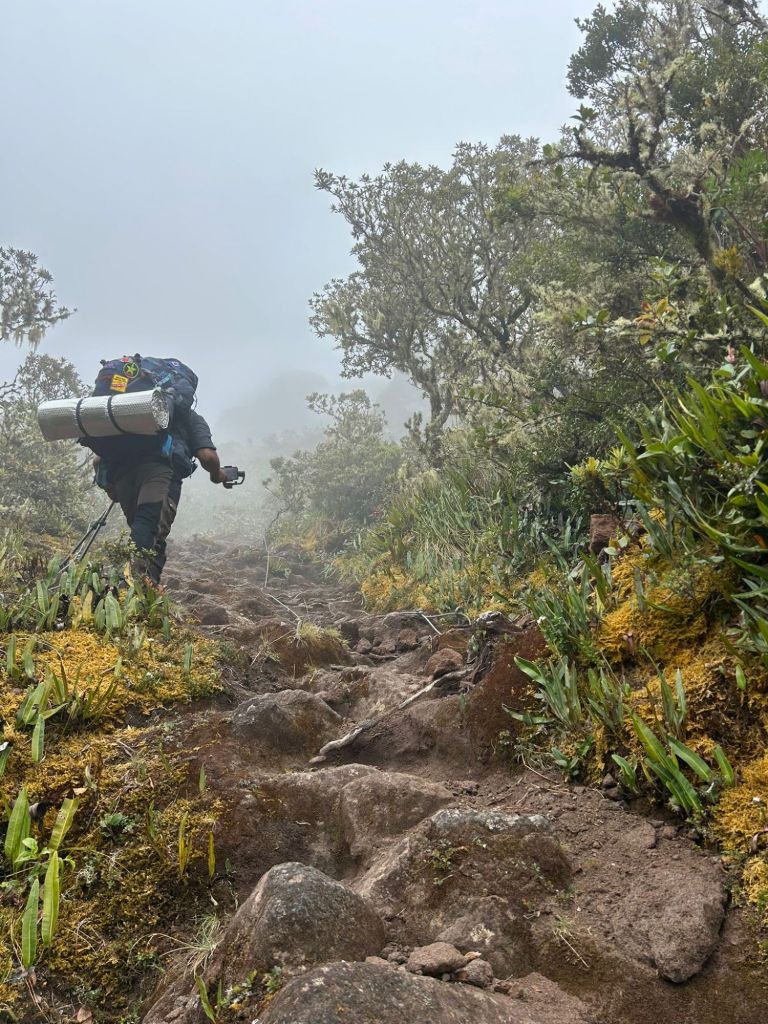
We talked about all kinds of things: Canada, Panama, travel, cultures, and, of course, good music. They wanted to experience the authenticity of the country; meanwhile, I was discovering their world.
In the middle of a steep climb, a phrase in French made me laugh: “Allez, allez!” And I immediately thought of our classic Panamanian expression: “¡Dale, dale!” Two expressions from different worlds that sound alike, carry similar meanings, and have exactly the same energy of encouragement when you’re giving everything you’ve got on a steep slope.
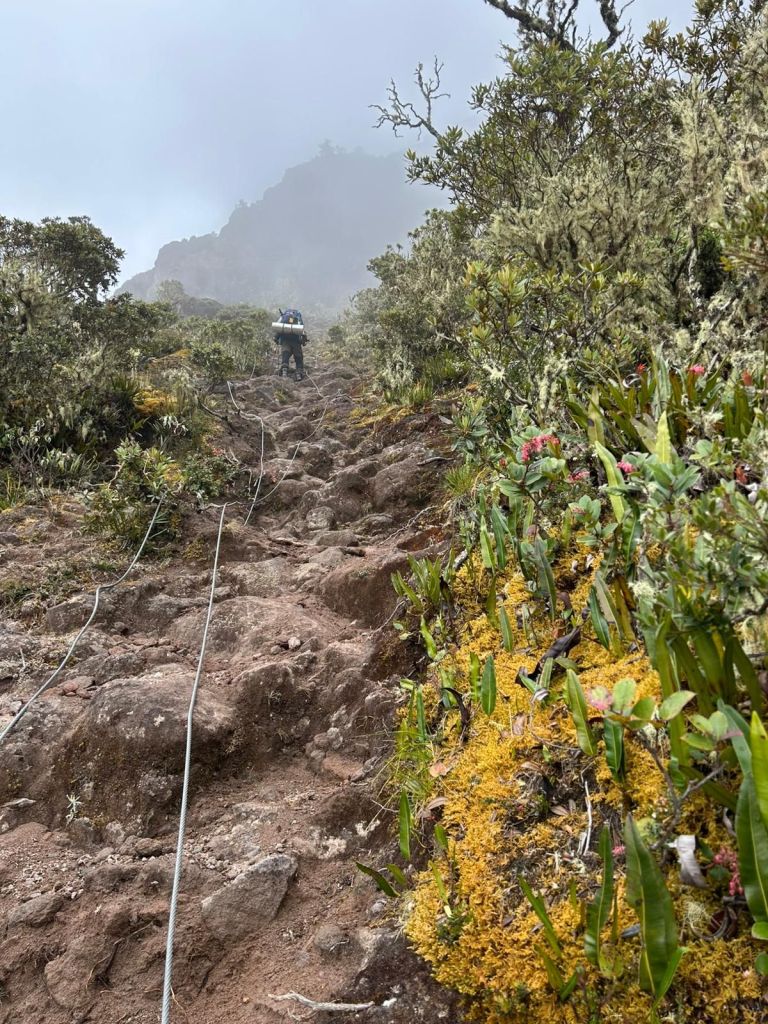
After the first five kilometers, the mountain starts to get serious. The slope becomes steeper, your heart rate rises, and the cloud-forest landscape begins to change. But those physically demanding kilometers ended up being some of the most memorable of the entire day.
The Peace of the Crater
Above 3,000 meters above sea level, things change. The air becomes thinner, your body feels it, and your mind shifts into another state. As we watched the afternoon fade and looked at the sunset, Madeleine asked me a straightforward question: Why don’t you ever get tired of climbing Volcán Barú so many times?
The answer came easily: every expedition or hike is a completely new universe. You can walk the same trail a hundred times, but you will never hike with the same people. Every group brings its own story, its own energy, and its own way of connecting with nature. When the people change, the mountain gives you a different experience.
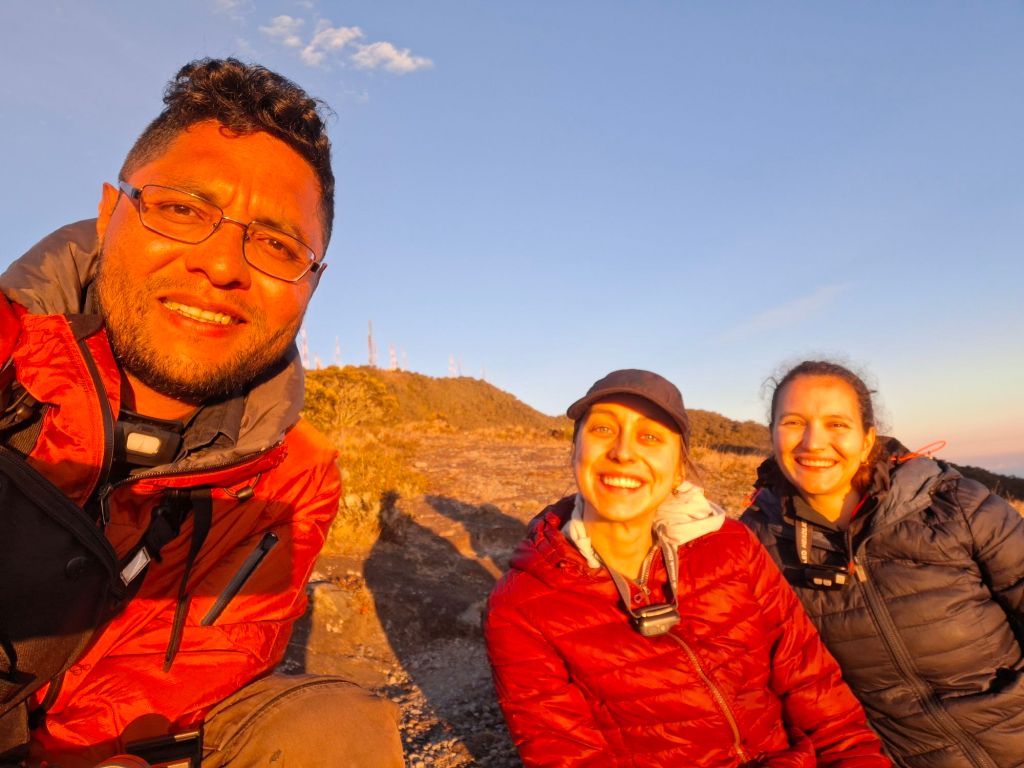
Besides, Barú is more than just work for me; it is my natural gym, the place where I put my body and mind to the test. But there is something even stronger: the peace of the crater. At that altitude, you enter a kind of total disconnection where the burdens of everyday life simply evaporate. You are there to breathe, let go of stress, and reconnect.
Sooner or later, you have to come back down and return to your routine — back on the chain gang, as The Pretenders’ classic song says — but that feeling of freedom is something no one can take away from you.
Music, Constellations, and an Upside-Down Cup
To warm ourselves up, I prepared one of my traditional herbal infusions. Between sips, the conversation turned toward songwriting. Since many of my songs are born from personal experiences, the girls wanted to know the stories behind the lyrics. It felt like opening a small personal archive in the middle of nowhere. Madeleine, in particular, really connected with the song Flor de la Calle.
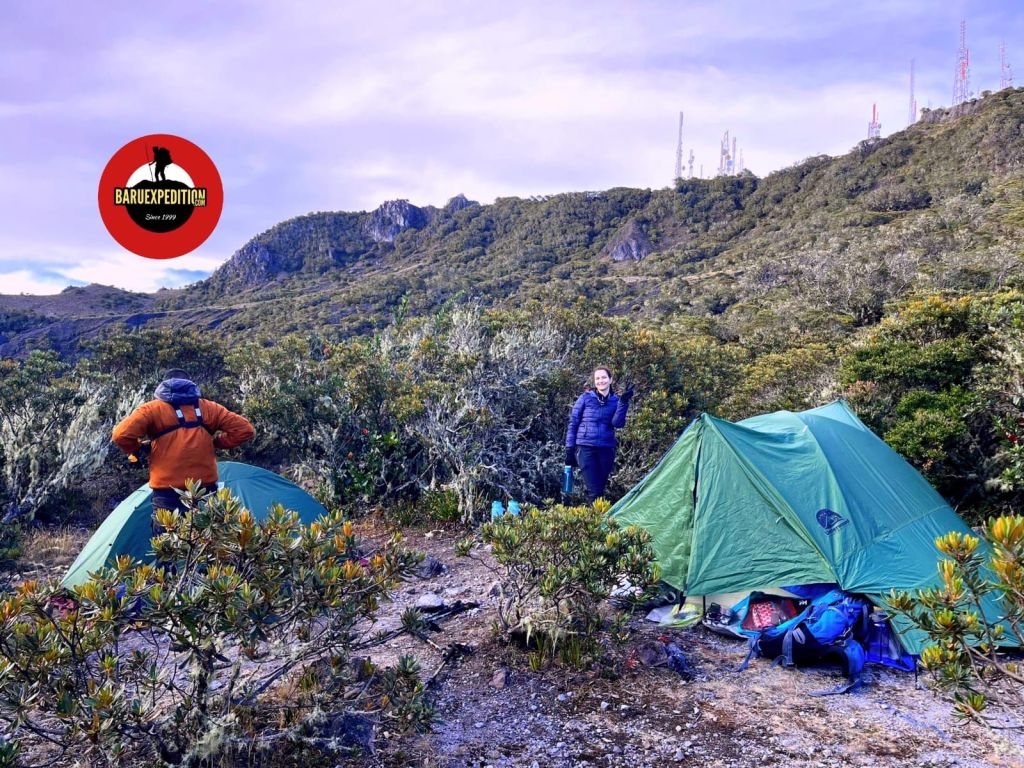
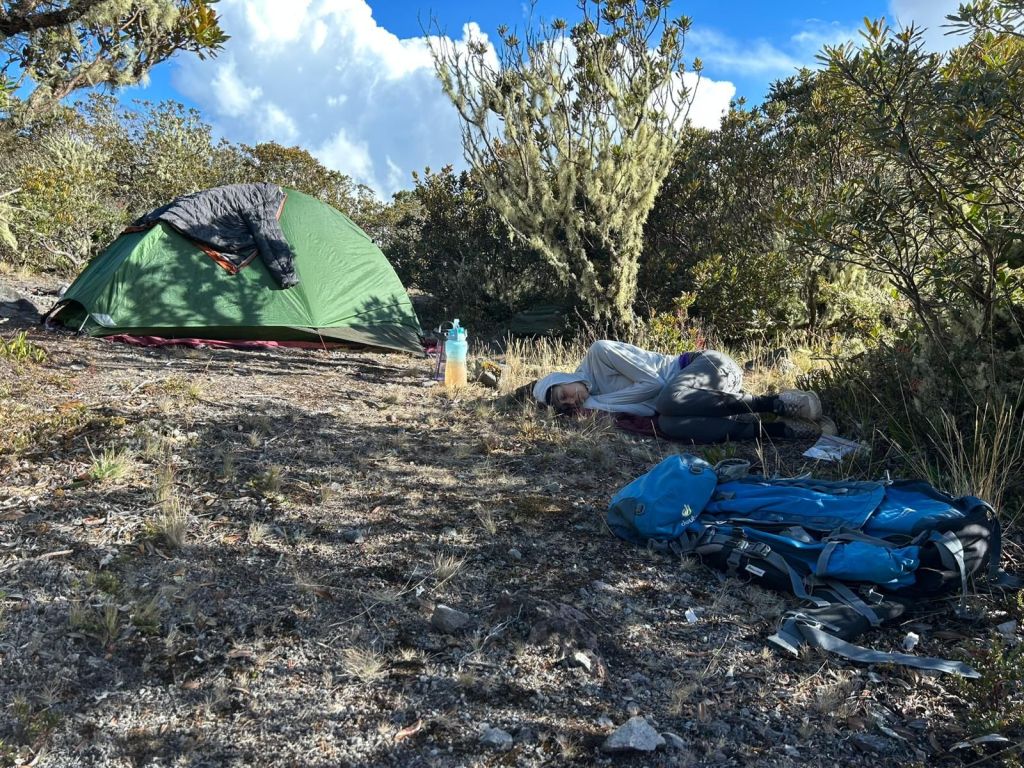
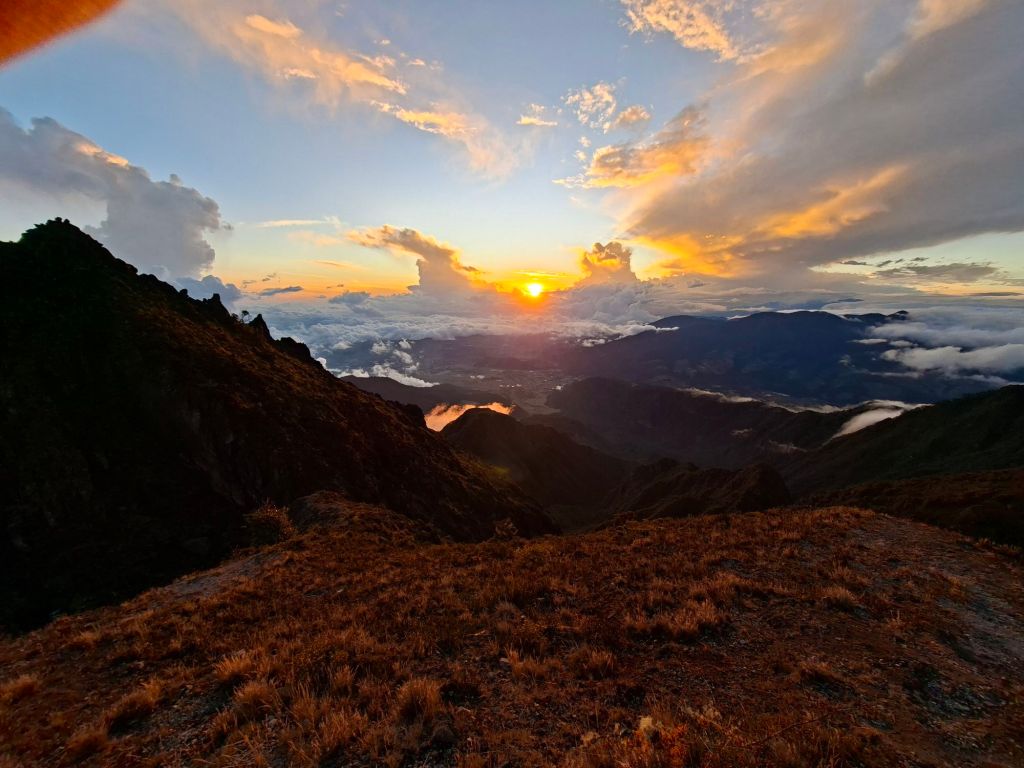
When we reached the camping area, we set up the tents. Since the afternoon sun can be intense at that altitude, we looked for the shade of the small high-altitude shrubs to rest after setting up camp. We relaxed for a while and then went to watch the sunset, which gave us an explosion of spectacular colors across the Chiriquí horizon.
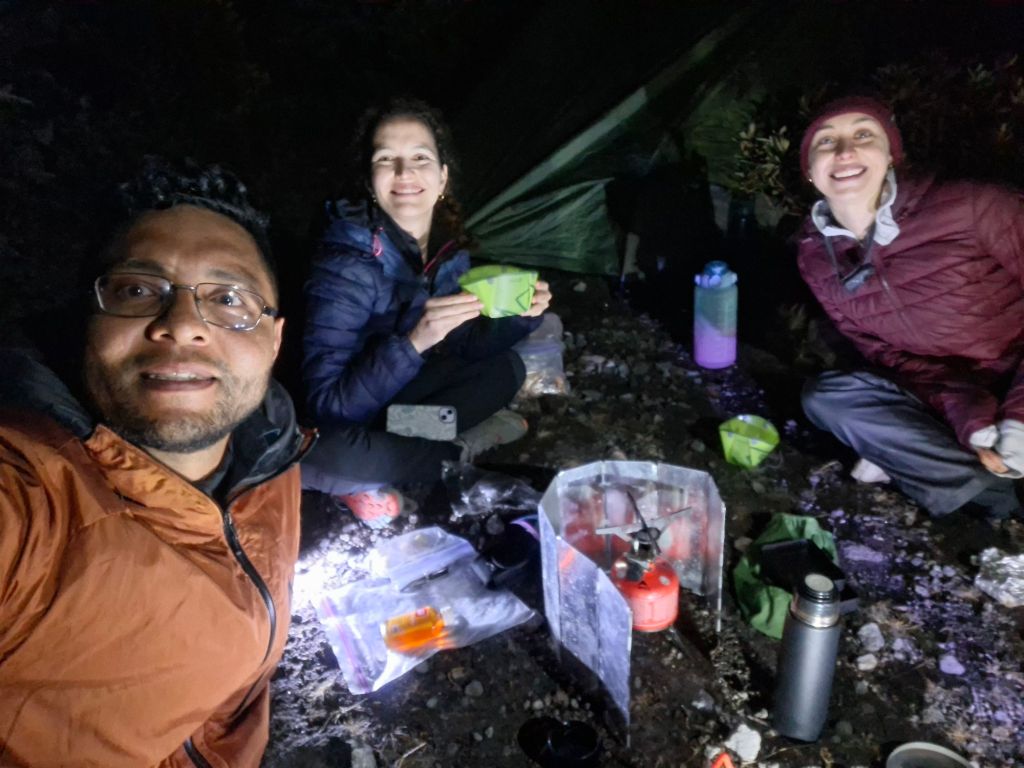
Back at the tents, the real atmosphere began. What had started as a guided expedition no longer felt like one; it had turned into an evening among friends. While cooking dinner in the cold, we pulled out our phones to create a musical backdrop and take photos and videos. We played songs I had written, but they also shared some Canadian French-rock songs they really liked — and so did I.
In the middle of it all, something very funny happened. While preparing some containers for our hot drinks, Jeanne assembled one of the cups completely upside down. Everyone burst out laughing. The funny thing is that ever since that night, whenever I put that damn cup together, I automatically place it upside down. I have to laugh at myself, take it apart, and put it back together correctly — and sometimes I even question how it was supposed to go in the first place, haha. Those are the unexpected little moments that give a trip its flavor.
To top it all off, the sky completely cleared. We were left with an incredible night sky, cloudless and filled with stars. We started looking for constellations while the voice of Dolores O’Riordan with The Cranberries played in the background.
Music, mountains, real cold, stars, and good stories. Everything came together into an almost spiritual experience. There was no need for any artificial spectacle; the magic was in the simplicity of three people sharing a night in the crater of a volcano, sheltered beneath an infinite sky.
Sunrise at the Highest Point in Panama
At midnight, we went to bed — they in their tent and I in mine. The early morning brought the characteristic winds of Barú and a brief drizzle, but with the right camping equipment, the night passed without any problems. At three in the morning, the alarm went off. We had one hour to break down the entire camp, and we began hiking at around 4:00 a.m. toward the highest point in Panama.
With accumulated fatigue in our legs but adrenaline running high, we made our way toward the highest point, where the Cross stands, to witness the main show: sunrise over the two oceans.
When the first rays of light began breaking across the horizon, all the physical effort suddenly made sense. You no longer think about the kilometers you have walked or the weight of your backpack; you think about everything you went through to be standing there at that exact moment.
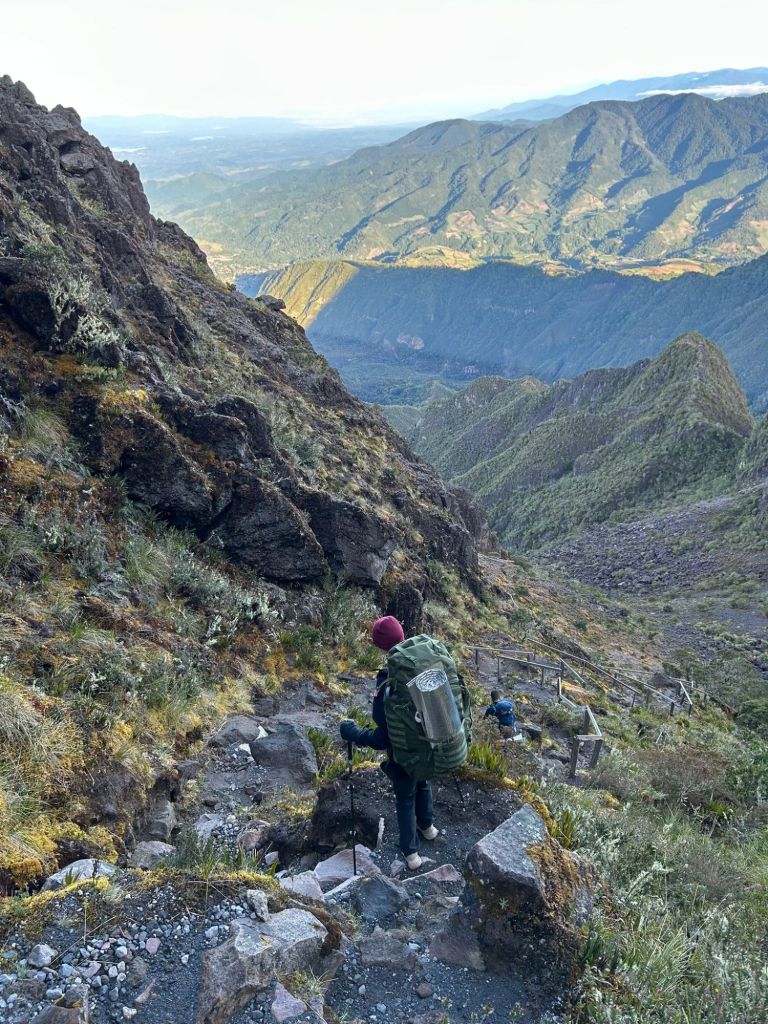
The descent and final goodbye had their own emotional touch. Some people arrive as clients and end up becoming part of the living memory of the mountain. Jeanne and Madeleine were among those people.
After the expedition, we stayed in touch. They sent me photos and videos of their dives along Panama’s coasts, and some time later Madeleine wrote to me from Mozambique, where she was exploring the depths of the Indian Ocean.
That’s how these mountain journeys are. You start a Volcán Barú tour thinking that you’re simply going to guide two people to the summit, and you end up finding deep conversations, music, cultural exchange, and authentic moments that money cannot buy and no itinerary can plan.
The Paso Ancho trail will always be there. The volcano and the crater aren’t going anywhere. But the people who walk it do change, and with every group, a completely new story is born. Years later, you don’t remember exactly how many hours it took you to climb; you remember the laughter, the songs in French, an upside-down cup, and the night you camped beneath a million stars on the roof of Panama.
That’s why, and for no other reason, I keep climbing Volcán Barú.


Leave a Reply